Why a Graffiti Birthday Party Is a Creative Family Experience
Birthday parties are changing
Children’s birthday parties no longer have to revolve around the same familiar combination of cake, games and a hired entertainment act. Many families are looking for activities that give children something to make, learn or experience together, while still feeling special enough for a birthday. That shift has helped creative parties become more popular, especially activities that let children take an active role instead of simply watching a performer.
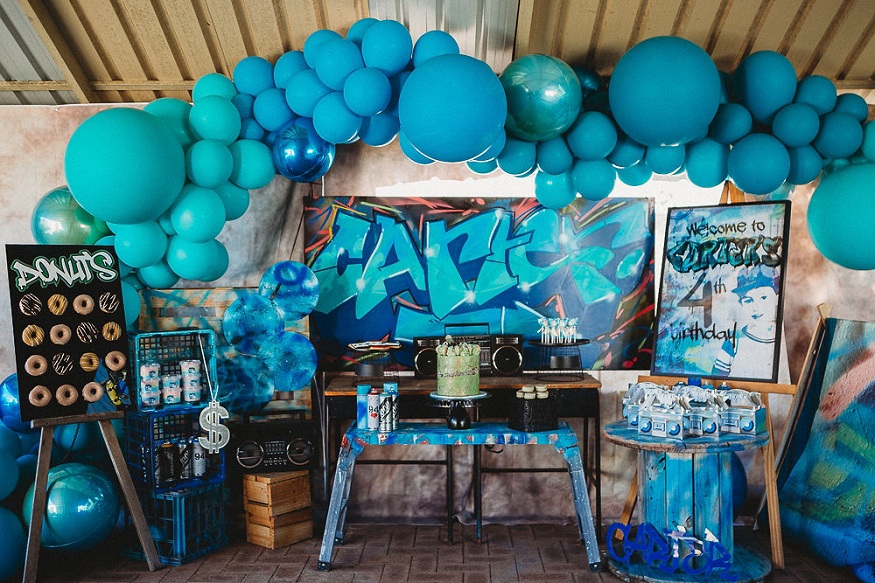
A graffiti birthday party fits naturally into that trend. It combines art, movement, music and urban culture with a clear end result: every child creates a piece of artwork to take home. The activity is social without requiring children to compete, and it gives the birthday child a central role without making the rest of the group feel like spectators.
Why graffiti appeals to children
Graffiti has a strong visual identity that is immediately recognisable to children. Large letters, bold outlines, characters, colour combinations and spray effects make it feel different from more traditional art activities. At the same time, a structured workshop shows children that graffiti is not simply spraying paint randomly. They discover that lettering, composition, movement and colour all influence the final result.
The attraction is also connected to freedom. A child can create a name, word, character or design and make choices about colours and shapes. There is usually no single correct answer, which means children with very different artistic abilities can participate at the same level. A child who regularly draws may enjoy refining details, while someone who does not normally see themselves as creative can still produce a strong visual result with guidance.
From idea to finished artwork
The strongest children’s graffiti workshops are built around a process rather than simply handing children spray cans. A typical programme begins with an introduction to graffiti and the activity, followed by a sketch on paper. The children then move on to their own panels, where they learn basic spray techniques and gradually build the artwork through colour, outlines and finishing details.
Graffitikinderfeestje.nl currently describes this type of programme as including a private graffiti artist, materials, a personal panel for each child and additional practical graffiti activities. The Graffiti kinderfeestje experience is designed for children from around six years old and is available in several Dutch and Belgian cities, while workshops can also be organised elsewhere.
A party where every child makes something
One of the biggest differences between a creative workshop and many conventional birthday activities is the individual result. Rather than completing one group game and moving on, each child works on a personal panel that develops during the party. This creates a clear sense of progress: the first sketch may look simple, but after filling, outlining and adding effects, it becomes a finished piece.
That personal result can also help with group dynamics. Children do not all have to work at the same speed or choose the same design. Some will spend more time on lettering, while others may experiment with colour or characters. The shared setting creates a common experience, but the finished work remains personal.
The birthday child stays at the centre
A well-designed children’s party should feel different from an ordinary afternoon with friends, and graffiti offers several ways to create that birthday feeling. The birthday child can receive extra attention from the artist, create a special name design or have additional options such as a personalised shirt. The group can also finish with a photograph of the completed artworks, giving the birthday child a visible role without turning the party into a competition.
This approach is particularly useful for parents who want a party that feels organised without becoming rigid. The artist leads the group through clear stages, but children still have room to make creative decisions. The result is a balance between structure and freedom, which is often what makes an activity work well for mixed groups of children.
What children learn without feeling like they are in a lesson
Creative learning is one of the less obvious benefits of a graffiti party. Children practise visual planning when they sketch their idea before painting. They learn how a surface changes when colour is layered, how different movements affect spray patterns and why outlines can change the way letters or shapes are perceived. These are basic design principles presented through an activity that feels like play.
There is also a practical element. Using spray paint requires children to listen to instructions, control their movements and work carefully around a shared environment. With appropriate supervision and suitable materials, the activity can introduce responsible use of an unfamiliar art tool while keeping the emphasis on creativity.
A different kind of family celebration
Parents often want children’s parties to be enjoyable for the children without making the whole event exhausting for the adults. A structured graffiti workshop can help because the main activity, materials and artistic guidance are brought together in one programme. Parents can be present and involved without having to invent a series of games or manage every transition themselves.
It can also suit different family styles. Some children want a large party with many friends, while others prefer a smaller group. Some families want a strong urban atmosphere, while others are mainly interested in the creative activity. The basic graffiti format can be adapted to the group while retaining the central idea of designing and making something together.
Amsterdam as a graffiti birthday setting
Amsterdam is particularly suitable for this type of celebration because graffiti and street art are already part of the city’s wider visual culture. The combination of industrial spaces, legal painting locations and a long connection with urban art gives a graffiti party a setting that feels different from a standard indoor children’s attraction.
For families planning a party in the capital, the Amsterdam graffiti birthday party programme includes a step-by-step structure with sketching, making a personal graffiti panel, painting on a graffiti wall and a group photo. The combination makes the activity feel like a complete birthday experience rather than a short craft session.
Why the artwork matters after the party
Many children’s party activities disappear as soon as the guests go home. A graffiti panel has a different lifespan. It can become part of a child’s bedroom, a keepsake from a birthday or simply a colourful reminder of something they made with friends. Because the design is created by the child, it also records a particular moment in their interests and imagination.
This is especially valuable for parents who are trying to reduce the number of disposable party items. Instead of filling a goodie bag with objects that may quickly be forgotten, the party itself produces a meaningful object. The artwork becomes part of the memory of the day rather than an accessory to it.
Read More: What Is An RFID Travel Wallet And Do You Really Need One?
Choosing a graffiti party for your family
A graffiti birthday party works best when the children are given enough time to understand the process and finish an artwork, rather than rushing through several unrelated activities. Parents should consider the age of the group, how many children are attending and whether the children already have an interest in drawing or street art. It is also useful to check the complete programme, supervision, materials and what each child takes home.
The most important factor, however, is whether the activity gives children genuine creative ownership. When children can choose what they want to write or draw, experiment with colour and see their idea become a physical artwork, the party becomes more than entertainment. It becomes an experience in which they actually make something themselves.
A birthday party with a lasting creative memory
Graffiti works surprisingly well as a family celebration because it combines the things a good children’s party needs: energy, creativity, social interaction and a clear sense of occasion. The urban style gives it a distinctive identity, while the structured workshop keeps the experience accessible to children who have never used spray paint before.
Read More: Too Windy For A Bouncy Castle? The Wind-Speed Rules Every Parent Should Know
For families looking beyond standard party formats, the appeal is simple. Children spend time with their friends, learn a little about graffiti and create an artwork they can keep. The party ends with more than photographs of the day: every child leaves having made something of their own.