
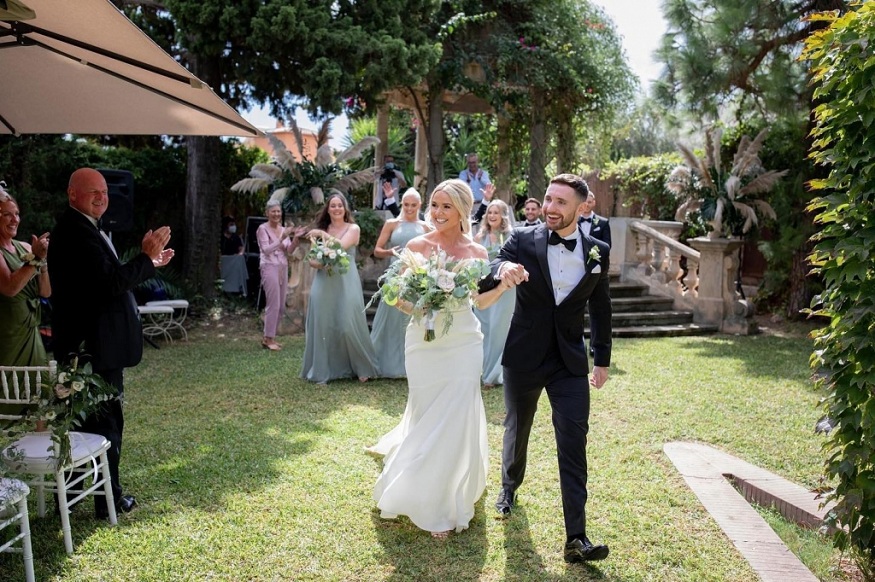
The Legal Bit: What You Need to Know About Getting Married in Spain as a Foreign Couple
A wedding in Spain conjures images of sunshine, celebration and effortless romance, but behind every beautiful ceremony lies a layer of legal detail that deserves careful attention. For foreign couples, the rules around marrying in Spain can be more complex than expected, and a little understanding at the outset will save a great deal of stress later. This guide explains the main options available to overseas couples, the documents you are likely to need, and the practical steps that will keep your plans on track.
Civil, Symbolic and Religious Ceremonies
Broadly speaking, couples marrying in Spain choose between a civil ceremony, a religious ceremony or a symbolic one. A civil marriage is legally binding under Spanish law, but it often comes with a residency requirement, meaning that at least one partner must be a legal resident of Spain. For many couples travelling from abroad, this makes a fully legal Spanish civil wedding impractical.
Read More: STITCH SOCKS: THE PERFECT GIFT FOR LITTLE DISNEY FANS
A symbolic ceremony, by contrast, carries no legal weight in itself but offers complete freedom over the words, the setting and the person who conducts it. For this reason, a great many international couples complete the legal formalities in their home country before travelling, then hold a symbolic celebration in Spain that delivers all the emotion and none of the bureaucracy. Religious ceremonies, meanwhile, follow the rules of the particular faith and may or may not be recognised in civil law depending on the circumstances.
The Popular Route: Legalise at Home, Celebrate in Spain
Because of the residency requirement attached to civil marriage, the most common approach for UK couples is to make the marriage legal at home and treat the Spanish event as the main celebration. This means visiting a register office in the United Kingdom to complete the legal marriage, often quietly and in advance, and then exchanging vows again in front of friends and family at your chosen Spanish setting. The symbolic ceremony can be tailored entirely to your taste, and your guests need never know it is not the legally binding moment.
This route removes much of the uncertainty around documentation and timing, and it is one that experienced Wedding Planners will be thoroughly familiar with. They can guide you through the sequence of events so that nothing is overlooked, and ensure that the celebration in Spain feels every bit as meaningful as a legal ceremony would.
Documents You May Need
If you do pursue a legally recognised marriage in Spain, be prepared for a significant amount of paperwork. Requirements vary by region and change from time to time, but commonly requested documents include valid passports, full birth certificates, proof of marital status, and certificates of no impediment confirming you are free to marry. Many of these will need to be officially translated into Spanish and legalised with an apostille.
- Valid passports for both partners.
- Full birth certificates, often issued within a specified recent period.
- A certificate of no impediment or equivalent proof of eligibility to marry.
- Official Spanish translations and apostille legalisation where required.
Because the exact list depends on your circumstances and the region in which you marry, it is essential to confirm the current requirements with the relevant Spanish authorities well in advance. Allow generous time for documents to be gathered, translated and legalised, as official processes can move slowly and delays are common.
Timing and Planning Ahead
Legal preparation is not something to leave until the last minute. Some documents have a limited period of validity, which means they must be obtained within a particular window before the wedding, while others can take weeks to process. Building a clear timeline, ideally with professional guidance, will help you avoid a last-minute scramble. Many of the most sought-after Wedding Venues require bookings a year or more ahead, so the legal and logistical planning naturally run in parallel.
Where Professional Help Makes the Difference
Navigating a foreign legal system in a language you may not speak is daunting, and this is precisely where local expertise proves invaluable. Reputable Wedding Planners and specialist legal advisers can interpret the current rules, liaise with local authorities on your behalf, and make sure your paperwork is complete and correctly presented. Their familiarity with the system removes a great deal of anxiety and frees you to concentrate on the celebration itself.
The legalities of marrying abroad need not be intimidating. With early preparation, accurate information and the right support, the administrative side of your Spanish wedding can be handled smoothly and quietly in the background, leaving you free to enjoy the part that truly matters: standing together beneath the Spanish sky and beginning your life as a married couple.
Treat the legal groundwork as the foundation on which everything else is built. Get it right early, verify each detail with an official source, and you will be able to approach the rest of your planning with complete peace of mind.
Same-Sex Marriage in Spain
It is worth noting that Spain was among the earliest countries in the world to legalise same-sex marriage, and same-sex couples enjoy full and equal marriage rights throughout the country. This progressive legal framework, combined with Spain’s warm and welcoming culture, has made it a particularly popular destination for same-sex couples marrying abroad. The same considerations around residency, documentation and ceremony type apply equally, and the same range of beautiful Wedding Venues is open to all couples.
Common Mistakes to Avoid
A few recurring pitfalls catch couples out, and being aware of them can save considerable trouble. Leaving documentation until the last minute is the most common error, as translations and legalisation can take far longer than expected. Assuming the rules are the same across all of Spain is another, since requirements genuinely vary by region. Failing to verify current regulations is a third, because rules change over time and out-of-date information can derail your plans.
- Starting the paperwork too late to meet validity deadlines.
- Assuming national uniformity when rules vary by region.
- Relying on outdated guidance instead of confirming current rules.
- Overlooking the need for official translations and legalisation.
Lean on Professional Support
Because the legal landscape can be intricate, professional support is invaluable. Reputable Wedding Planners and specialist advisers deal with these requirements regularly and can guide you through each step, while your home country’s consular services can advise on the documents you will need from your end. By combining reliable local expertise with official guidance, you can be confident that nothing important is overlooked. The administrative side may lack the romance of choosing your venue or menu, but handling it properly is what allows the rest of your celebration to proceed without a hitch.
Read More: LIGHTWEIGHT COTTON PAJAMAS THAT WON’T TRAP HEAT
Keeping the Legalities in Perspective
It is easy to feel daunted by the legal side of marrying abroad, but it helps to keep things in perspective. Thousands of couples navigate these requirements successfully every year, and with the right preparation and support there is no reason yours should be any different. The key is to start early, rely on accurate and up-to-date information, and lean on professionals who deal with these matters routinely. Handled methodically and in good time, the paperwork becomes a manageable series of steps rather than an obstacle, leaving you free to look forward to the celebration itself with confidence and excitement.