Too Windy for a Bouncy Castle? The Wind-Speed Rules Every Parent Should Know
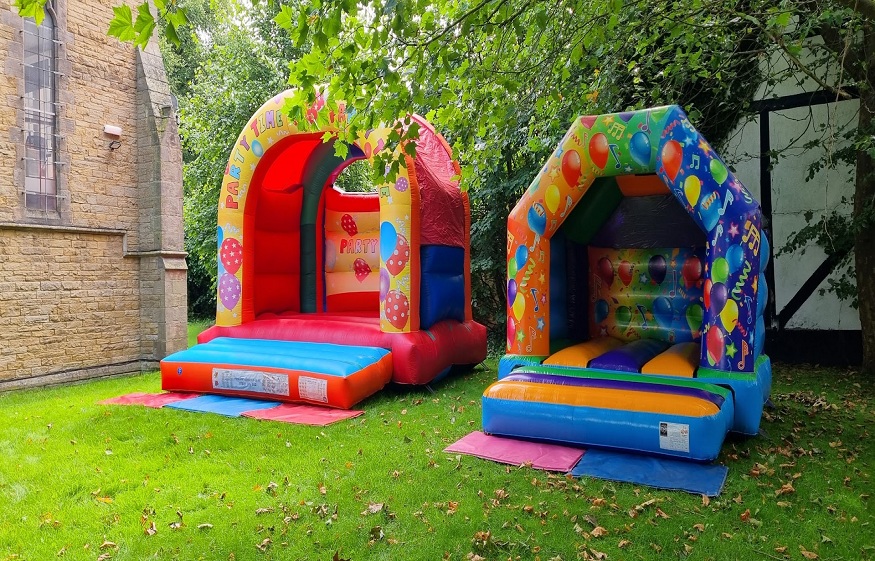
A bouncy castle can turn a garden party, school event or family celebration into a day children remember. Wind, however, can change a safe setup surprisingly quickly.
In the UK, no play inflatable should be used in winds above 24 mph, or 38 km/h. That is Force 5 on the Beaufort scale. Some inflatables have a lower maximum wind speed, so the manufacturer’s operating manual must always be checked before use. The lower limit is the one that matters.
How Windy is Too Windy for a Bouncy Castle?
The general UK upper limit for play inflatables is 24 mph. The Health and Safety Executive states that no inflatable should be used above this speed and warns that certain models may have a lower limit.
A simple rule is:
| Wind condition | What to do |
| Safely below the product limit | Continue monitoring |
| Wind or gusts approaching the limit | Stop play and reassess |
| At the manufacturer’s limit | Do not operate |
| Above 24 mph or 38 km/h | Do not use the inflatable |
| Sudden or unpredictable gusts | Stop play and deflate safely |
This means a castle with a stated maximum of 20 mph must not be operated at 21 mph, even though the general HSE upper limit is 24 mph.
For parents arranging a garden celebration, understanding the safe wind speed for a children’s bouncy castle is just as important as checking the available space or the number of children attending.
Why is Wind Dangerous for a Bouncy Castle?
A bouncy castle has a large surface area. Its walls, roof and pillars can catch moving air much like a sail.
Correct anchoring is designed to keep the inflatable secure, but anchoring does not make it suitable for unlimited wind conditions. Strong gusts can place sudden pressure on anchor points, ropes and the inflatable itself.
Every available anchorage point should be used. A typical inflatable should have at least six anchor points, although the manufacturer’s manual will confirm the number required for the individual design.
The best anchoring method for a bouncy castle on grass may differ from the method used indoors or on hardstanding. Pegs are commonly used on suitable grass, while indoor setups may require correctly positioned weighted anchor systems. The product instructions should always take priority.
Read More: STITCH SOCKS: THE PERFECT GIFT FOR LITTLE DISNEY FANS
How Should Wind Speed Be Measured?
Wind should be measured with an anemometer at the actual location of the inflatable.
An anemometer is a small device that records wind speed. It gives a clearer picture of conditions around the castle than judging the wind by how it feels or relying only on a forecast for the wider area.
The Met Office explains that wind measurements can be affected by nearby buildings, trees, terrain and other obstacles. Conditions in an open field may therefore be different from those in a sheltered garden or enclosed venue.
Before children enter the castle:
- Check the day’s weather forecast.
- Read the inflatable’s maximum wind-speed limit.
- Take an anemometer reading beside the castle.
- Check the anchoring and surrounding area.
- Continue taking readings while the inflatable is in use.
- Stop if conditions approach the permitted limit.
For regular event use, keeping a simple written wind log can also make safety checks more consistent.
Do Wind Gusts Matter More Than Average Wind Speed?
Both average wind and gust speed matter.
Average wind speed describes the more usual level of wind over a period. A gust is a shorter, stronger burst. A forecast may show an average wind speed that appears acceptable while also predicting gusts above the inflatable’s safe limit.
Never use the average figure to dismiss a higher gust reading. The highest relevant reading should guide the decision.
Conditions should be checked again if trees begin moving more heavily, anchor ropes repeatedly tighten, the castle moves unusually or the weather changes suddenly.
Seven Signs it May be Too Windy to Continue
Stop play and check the wind when:
- The anemometer is approaching the stated limit.
- Gusts become stronger or more frequent.
- Anchor ropes repeatedly pull tight.
- The inflatable walls or roof move unusually.
- Pegs, weights or anchor points appear to shift.
- Nearby trees begin swaying noticeably.
- Conditions become difficult to monitor confidently.
Visible movement is not the main safety test. An anemometer reading and the operating manual remain more reliable than waiting for the castle to show an obvious problem.
What Should You Do When the Wind Rises?
If conditions become unsafe, act early and calmly.
Stop new children from entering and ask everyone already inside to leave. Check that the bounce area and slide are completely empty before beginning the shutdown procedure.
Switch off and deflate the castle according to the manufacturer’s instructions. Children and adults should remain away from it while it deflates.
Do not restart simply because one later reading is lower. Check that conditions have settled, inspect every anchor point and confirm that the full setup remains safe.
A clear bouncy castle safety rule board can also help parents, staff and event guests understand user rules, although it does not replace active adult supervision. Raynes Baby World supplies rule boards alongside its wider range of play equipment.
Bouncy Castle Wind-Safety Checklist
Before every outdoor session, confirm that:
- The operating manual is available.
- The maximum wind-speed limit is known.
- The forecast has been checked.
- A working anemometer is on site.
- Every required anchor point is in use.
- Pegs, ropes, fittings or weights are secure.
- The ground and surrounding space are suitable.
- One responsible adult is monitoring play.
- Gusts are checked as well as average wind.
- A clear shutdown plan is understood.
Before buying kids’ bouncy castles for garden parties, check the operating documents, dimensions, anchoring requirements and included accessories.
Frequently Asked Questions
Can you use a bouncy castle in 20 mph winds?
Only when 20 mph is below the inflatable’s stated maximum and the gust speed also remains below that figure. Keep measuring conditions because wind strength can change during the event.
Is 24 mph always safe for a bouncy castle?
No. Twenty-four mph is the absolute upper limit in HSE guidance. A particular castle may have a lower maximum, in which case the lower manufacturer limit must be followed.
Can a weather app replace an anemometer?
No. A weather app is useful before the event, but an anemometer measures the conditions beside the inflatable, where buildings, trees and open ground may affect the wind.
Can a bouncy castle be used indoors on a windy day?
Potentially, provided the venue has suitable floor space, ceiling clearance and safe anchoring. The operating manual and venue requirements still apply, even when outdoor wind is not the main concern.
How often should bouncy castle wind speed be checked?
Check before inflation, before children enter and regularly throughout use. Take an immediate extra reading whenever the weather, gust strength or movement of the inflatable changes.
Read More: LIGHTWEIGHT COTTON PAJAMAS THAT WON’T TRAP HEAT
When in Doubt, Stop the Bounce
Wind safety does not need to be complicated. Know the limit, measure conditions beside the bouncy castle and stop before the reading reaches an unsafe level.
A few calm checks can protect the children using the inflatable, the adults supervising them and the equipment itself.